Traditional desks in neat rows are no longer the only way students learn. Alternative seating—also known as flexible seating—is gaining popularity in schools for its potential to improve student engagement, focus, and comfort. By providing a variety of seating options (from floor cushions to standing desks), teachers are transforming classrooms into more dynamic learning environments.
Mounting research and real-world experience are highlighting significant benefits of this shift, showing that it can cater to diverse student needs, foster engagement, and even enhance academic outcomes. In this blog, we’ll explore how alternative seating can reduce restlessness, support different learning styles, and empower students with choice—all while ensuring a safe, inclusive classroom for everyone.
One of the biggest advantages reported with alternative seating is higher student engagement. When students are comfortable and have some control over where they sit, they tend to be more invested in learning. Many educators report that when students are given seating choices, they are often less distracted and more willing to participate.
Teachers also notice the difference. After introducing flexible seating, many classrooms report fewer disruptions and more time spent on-task. In practice, this can look like students staying engaged longer during lessons, transitioning more smoothly between activities, and taking more ownership of their learning environment.
Anyone who’s spent time in an elementary classroom knows that young learners need to move. Traditional chairs can make energetic kids feel confined, leading to restlessness or fidgeting. Alternative seating helps channel that energy in positive ways.
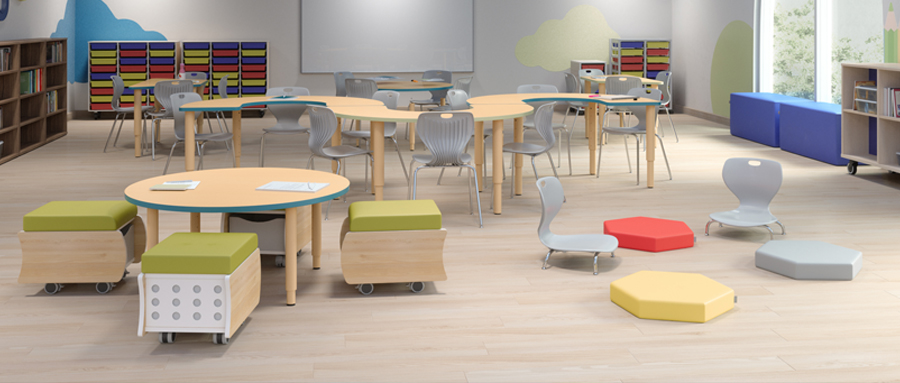
Options like wobble stools, standing desks, or floor seating let students shift, sway, or change posture as they work—getting the wiggles out without disrupting others. This flexibility can be especially helpful for students with sensory needs or attention challenges, because movement can support focus rather than compete with it.
There are also physical benefits: being able to stretch or adjust posture can improve comfort, support better circulation, and reduce fatigue during longer learning blocks.
Every student is unique, and a one-size-fits-all chair doesn’t suit all learners or activities. Alternative seating offers variety, ensuring each student can find a spot that fits their needs.
Some children might concentrate best in a quiet, cozy nook, while others prefer an open, roomy area. For example, a student may love sitting low to the ground on a cushioned seat for independent reading, while another might thrive at a taller surface for writing, building, or group work.
Providing a range of options—floor cushions, soft seating, stools, and semi-enclosed spaces—supports different learning preferences and different tasks throughout the day (reading, brainstorming, test-taking, etc.).
“Today we are highlighting alternative seating like our Book Beetle and Book Hub. Alternative seating can improve student engagement and give students the freedom to choose how they learn best. Whether it's sitting low to the ground on a comfy Book Beetle to read or tucking into the Book Hub for focused solo work, these options reduce restlessness and support different learning needs. At MityBilt, we design all our furniture with functionality and need in mind. Our alternative seating is safe, durable and easy to maintain and most importantly it helps students feel empowered, included and ready to learn.”
— Cindy Timani, MityBilt Designer
A less talked-about benefit of alternative seating is the boost to student agency and confidence. When students can decide where and how to sit, they feel a greater sense of ownership over their learning experience. This autonomy can translate into higher motivation, stronger self-awareness, and better self-regulation.
Flexible seating also supports inclusion. Not all students learn the same way, and by offering multiple seating styles, the classroom signals that different needs are welcomed—not treated as problems. A variety of seating options helps ensure every student has a place where they feel comfortable and ready to learn.
Introducing flexible seating doesn’t mean sacrificing on quality or safety. Classroom furniture must be safe, sturdy, and easy to maintain—and alternative seating is no exception.
Well-designed alternative seating supports high-traffic school use with durable materials, cleanable surfaces, and features that help keep spaces organized and functional. Pieces designed specifically for schools can handle everyday wear while still providing comfort and flexibility for students and teachers alike.
Alternative seating in schools is more than a classroom trend—it’s a practical approach to creating learning spaces where students can thrive. By reducing restlessness, supporting diverse learning needs, and giving kids the freedom to choose how they learn best, flexible seating helps create a more student-centered environment.
When students feel comfortable and empowered, they’re often more engaged, more included, and more ready to learn—exactly what modern classrooms are aiming to achieve.
PO BOX 1158
20 Limestone Bay
Stonewall, MB
R0C 2Z0
T 204.467.5790
E solutions@mitybilt.com
Follow us on:


Sign up for our newsletter